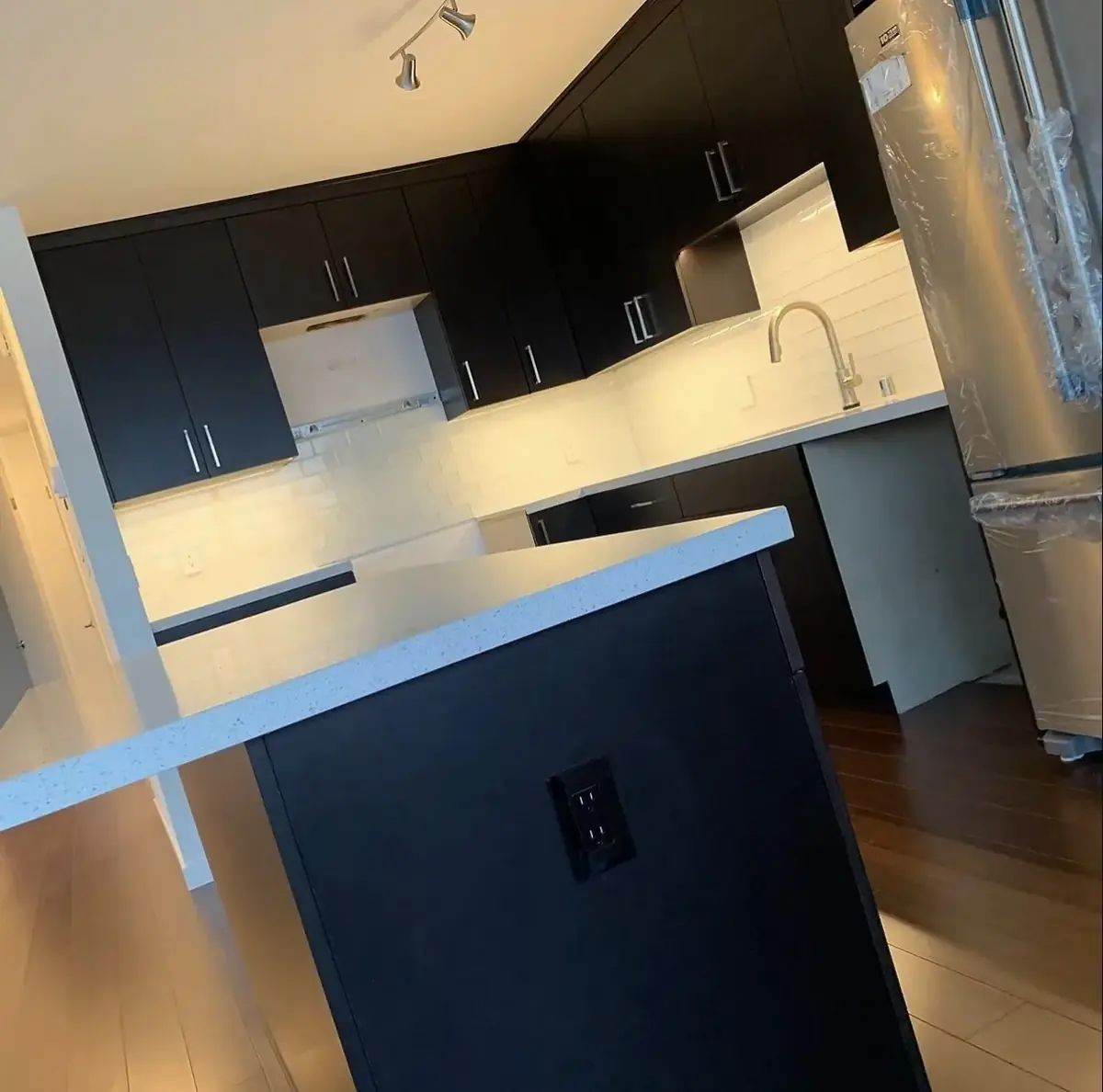
Recessed and decorative lighting
Pot lights in new or finished ceilings, pendants over islands and tables, chandeliers, wall sconces and exterior fixtures. The work starts with a layout agreed in the room, then the cutting, the wiring to a switch or dimmer, the fixtures and the patching of any access holes.
When you need it: a kitchen or living room that is dim in the corners, a dining table with nothing over it, a renovation where the lighting plan has not been thought about yet, or fixtures that are dated or no longer working.
What affects scope: whether the ceiling is open or finished, insulation above it, how far the nearest power source is, the number of switch locations, and whether the fixtures are being supplied by you or by us.
The lighting page covers layouts, dimmers and fixture types in detail.
Pot lights in insulated ceilings
Where there is insulation above, the fixtures must be rated for contact with it. Slim LED units are, and they also need far less depth than the old cans, which is why they can go almost anywhere.
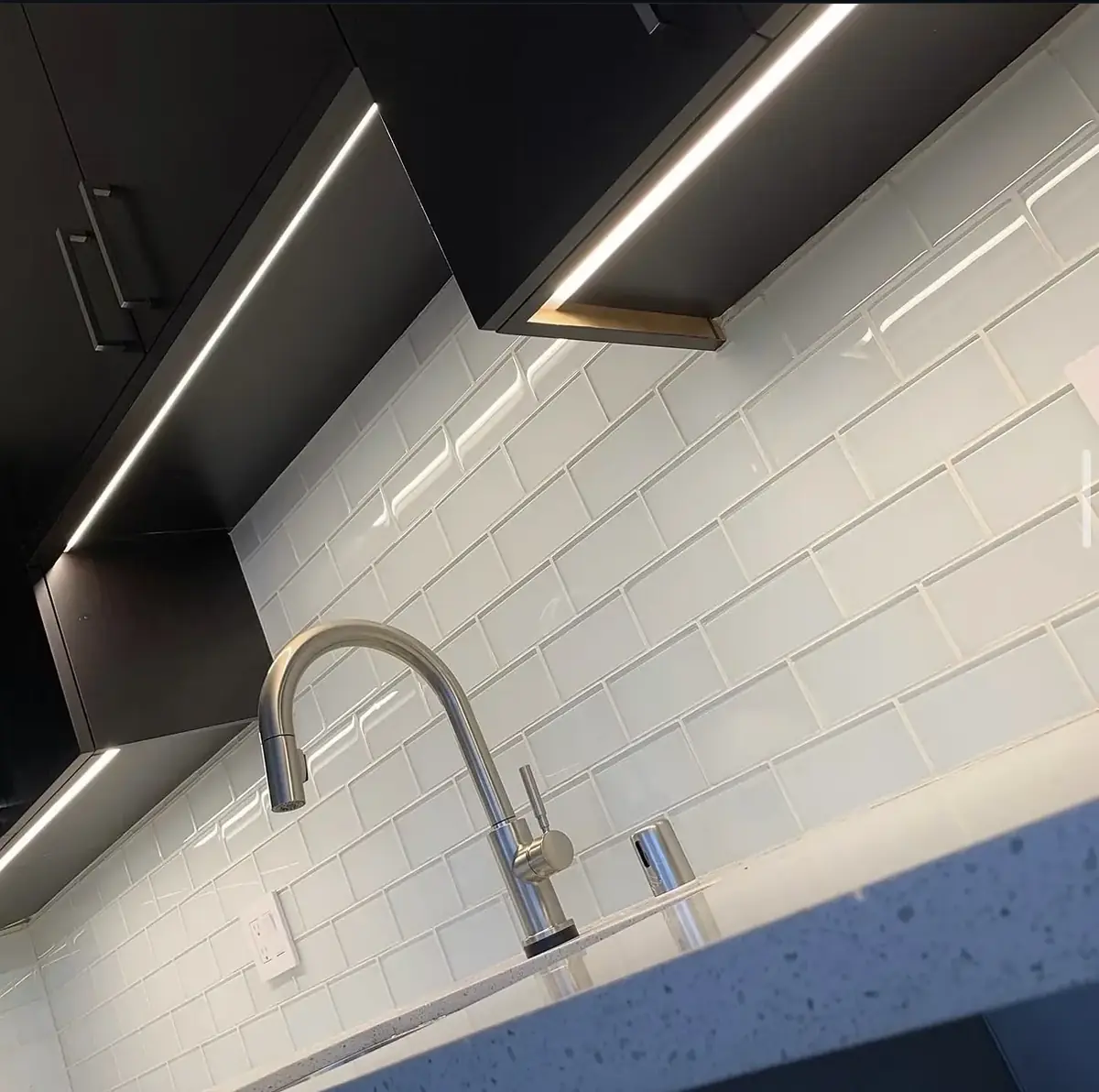
Kitchen under-cabinet lighting
Hardwired LED strips or slim bars under the upper cabinets, fed from a concealed driver and switched or dimmed from the wall. We fit the light toward the front edge of the cabinet so it falls on the counter and backsplash, not down the wall, and choose a colour temperature that matches the ceiling lights so the kitchen does not look like two different rooms at night.
When you need it: a counter that is in your own shadow when you work at it, a backsplash you would like to show off, or a kitchen renovation where the cabinets are going in and the wiring can be run before they do.
What affects scope: whether the cabinets are already installed, where the driver can be hidden, how many separate runs there are, and whether you want it on a dimmer or a simple switch.
Switches and outlets
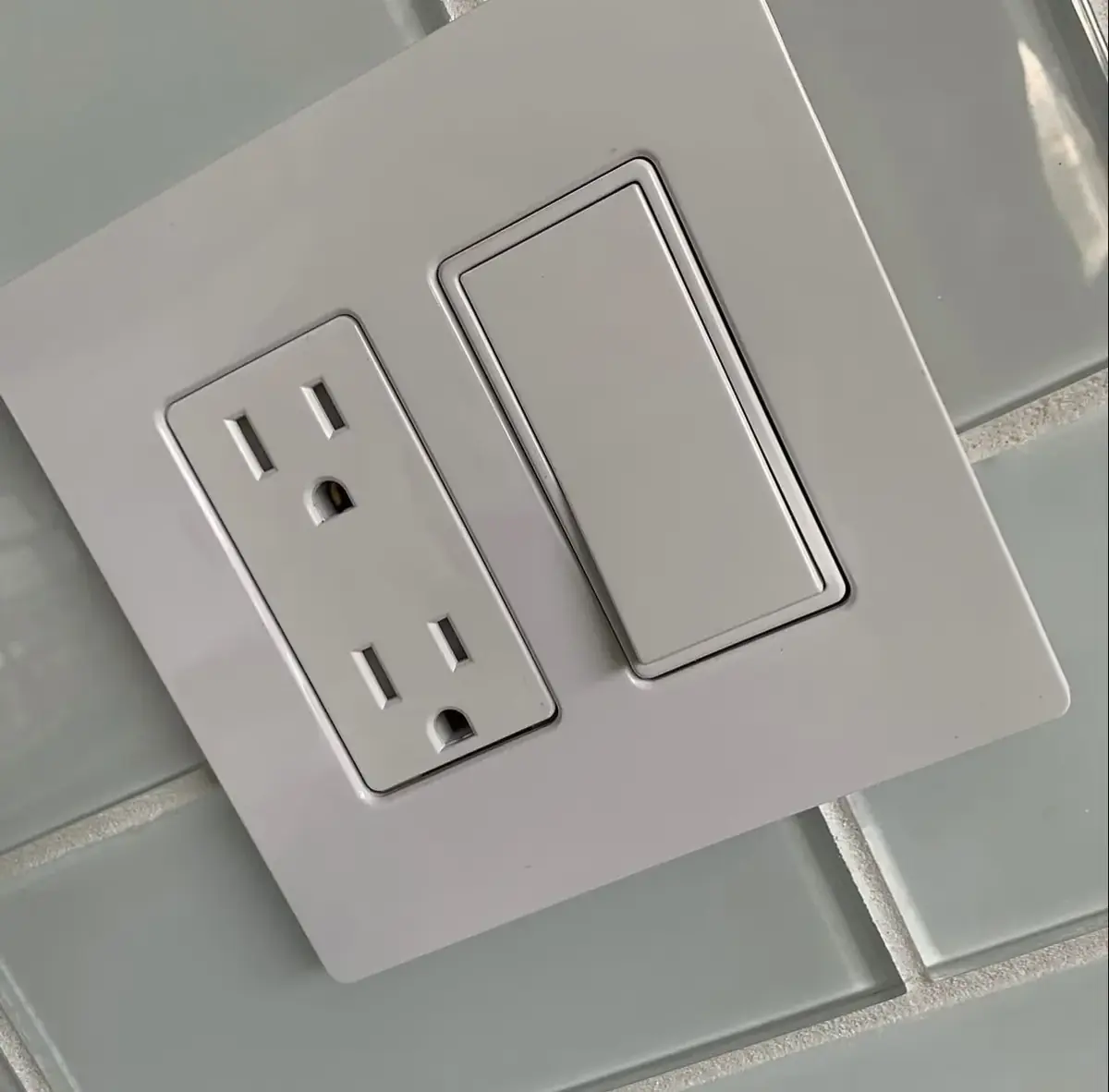
Replacing worn, yellowed or mismatched switches and receptacles across a room or a whole house; adding outlets where you keep needing an extension cord; receptacles in island ends and on backsplashes; dimmers and three-way switching; GFCI protection in kitchens, bathrooms, garages and outdoors; and USB or smart devices where you want them.
When you need it: a plug that no longer grips, a switch that is warm or crackles, outlets in a kitchen without GFCI protection, two-prong outlets, or a room where every device is a different shade of beige.
What affects scope: the number of devices, whether the boxes behind them are the right size, the age and type of the existing wiring, and whether new circuits are needed to add outlets rather than just replace them.
A warm, discoloured or buzzing device is not a cosmetic problem. Stop using it and have it looked at.
Electrical troubleshooting
A breaker that keeps tripping, an outlet or a whole room with no power, lights that flicker or dim when an appliance starts, a GFCI that will not reset, or a smell of heat from a device. We start with the symptom and measure rather than guess: which circuit, what is on it, what the readings say at the panel and at each device, until the cause is found and fixed.
When you need it: any of the above, especially if it is getting more frequent. If something is sparking or smoking, switch off the breaker if you can do so safely and call 911 before calling anyone else.
What affects scope: how many devices share the circuit, whether the fault is at a device or inside a wall, how the previous work was done, and whether the fix is a single connection or a run of cable.
Common causes we find
- A loose connection in an outlet box upstream of the one that is dead.
- A tripped GFCI in another room protecting the outlet you are looking at.
- An old dimmer driving LED lamps it was never designed for.
- Too many kitchen appliances on one circuit.
- A junction left behind a finished wall or ceiling by a past renovation.
Before we arrive
Leave a tripping breaker off. Note what was running when it tripped and the time. If an outlet is dead, check whether any GFCI in the house has its button popped. Clear a path to the panel.
Residential updates and renovations
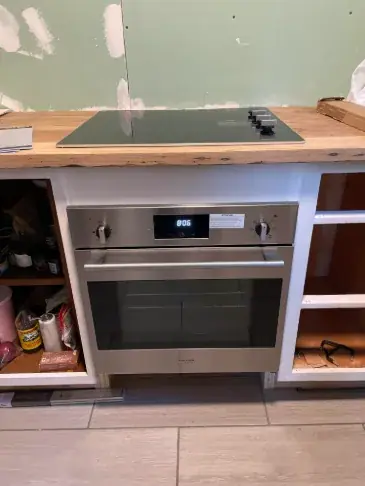
Electrical for kitchen and bathroom renovations, finished basements, additions and home offices. That means the rough-in while the walls are open, dedicated circuits for ovens, cooktops, dishwashers, microwaves and bathroom heaters, the lighting and switching plan, and the finishing once the drywall and cabinets are in. We coordinate with your contractor and the other trades so the boxes are where the cabinets and tile expect them to be.
When you need it: any renovation that moves a wall, adds an appliance or changes where the lights and switches are, and older updates that were done without a permit and need putting right.
What affects scope: how much of the existing wiring can stay, the capacity of the panel, the number of new circuits, and how much of the finishing falls to us versus the contractor.
Not sure which of these you need?
Describe what you see or what you want changed. That is enough to start, and we will tell you which page applies before quoting.